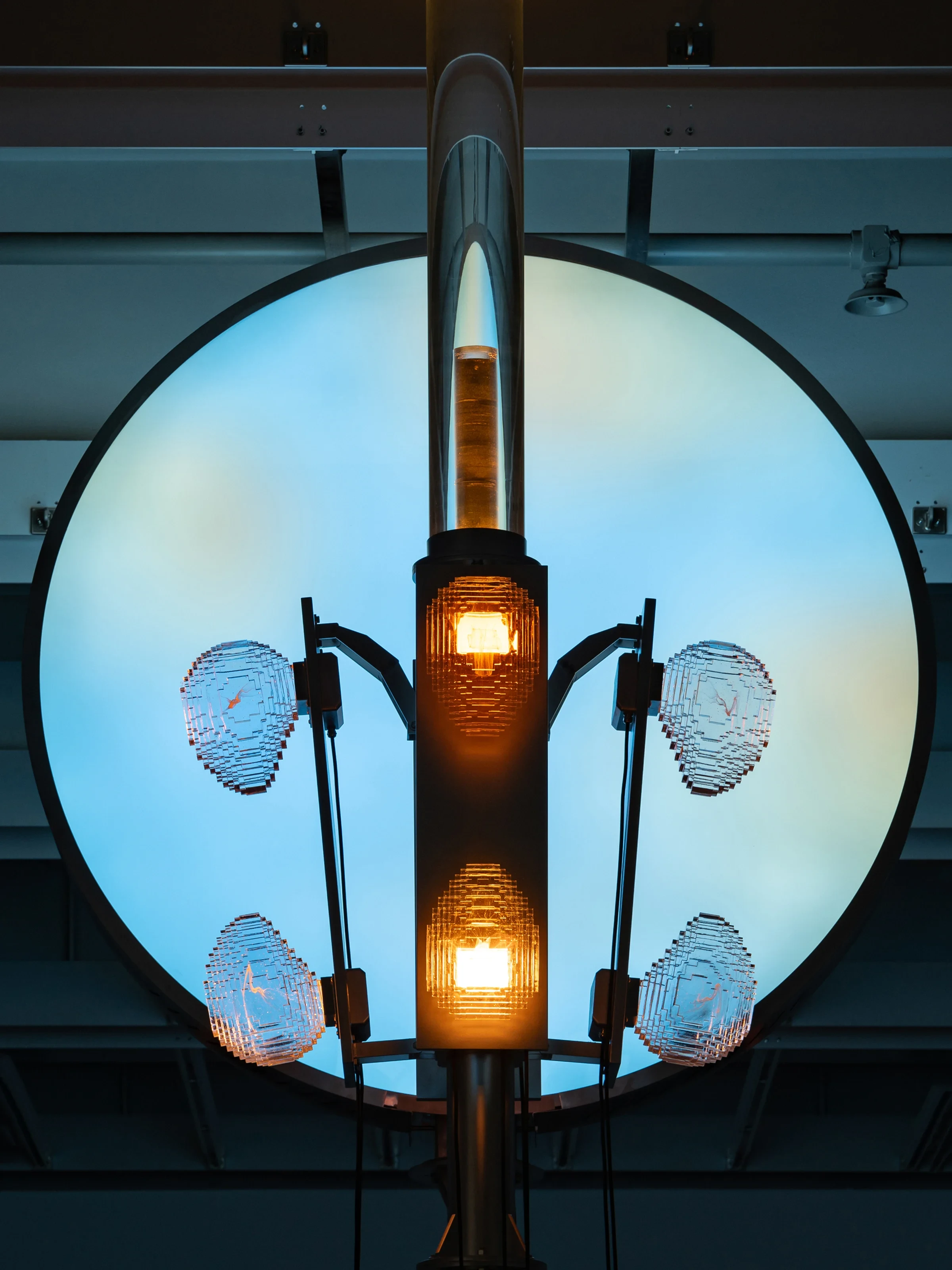
NOON
Zhang Ding
Tianmu Li Art Museum
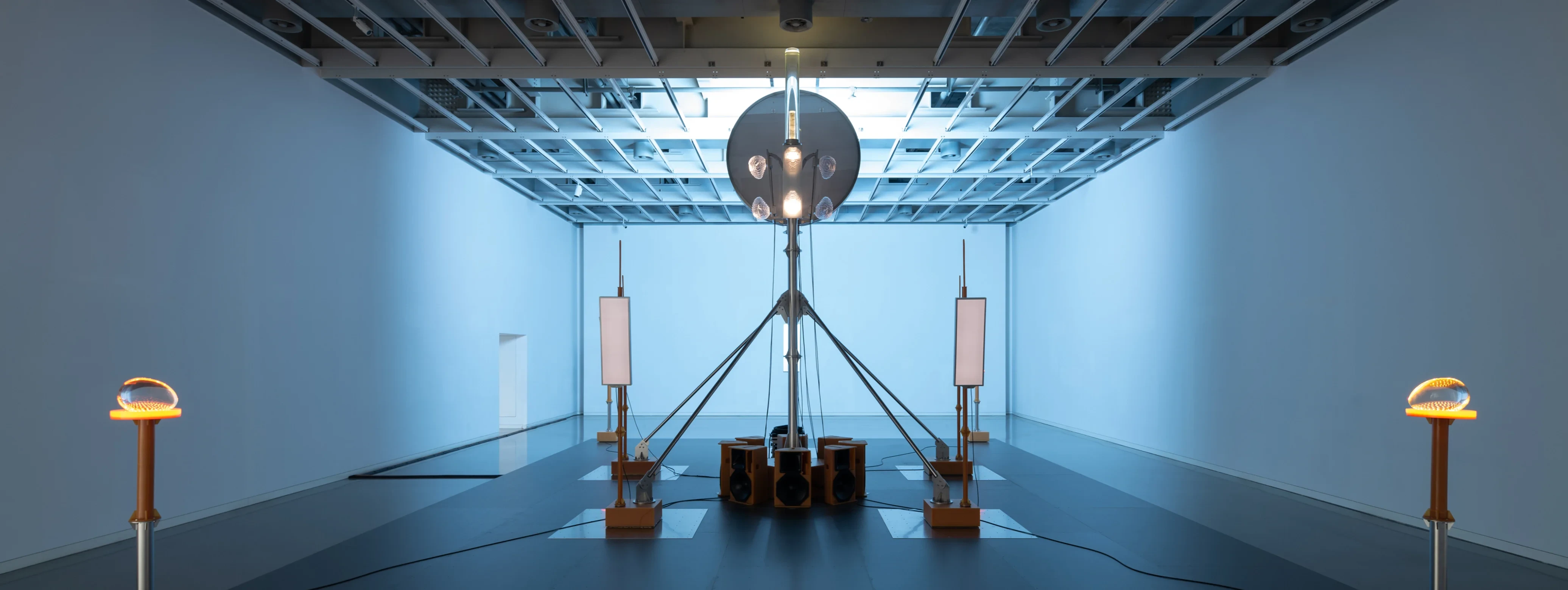
At the beginning of 2024, OLL collaborated with artist Zhang Ding to initiate an experimental project exploring the integration of art and technology, inspired by light. In Noon, light becomes a link between people and space, nature and the artificial, blurring the boundaries between them. Through SDL (Software Defined Lighting) spectrum technology, Zhang Ding releases light from its purely functional role, transforming it into a medium for emotion and thought.
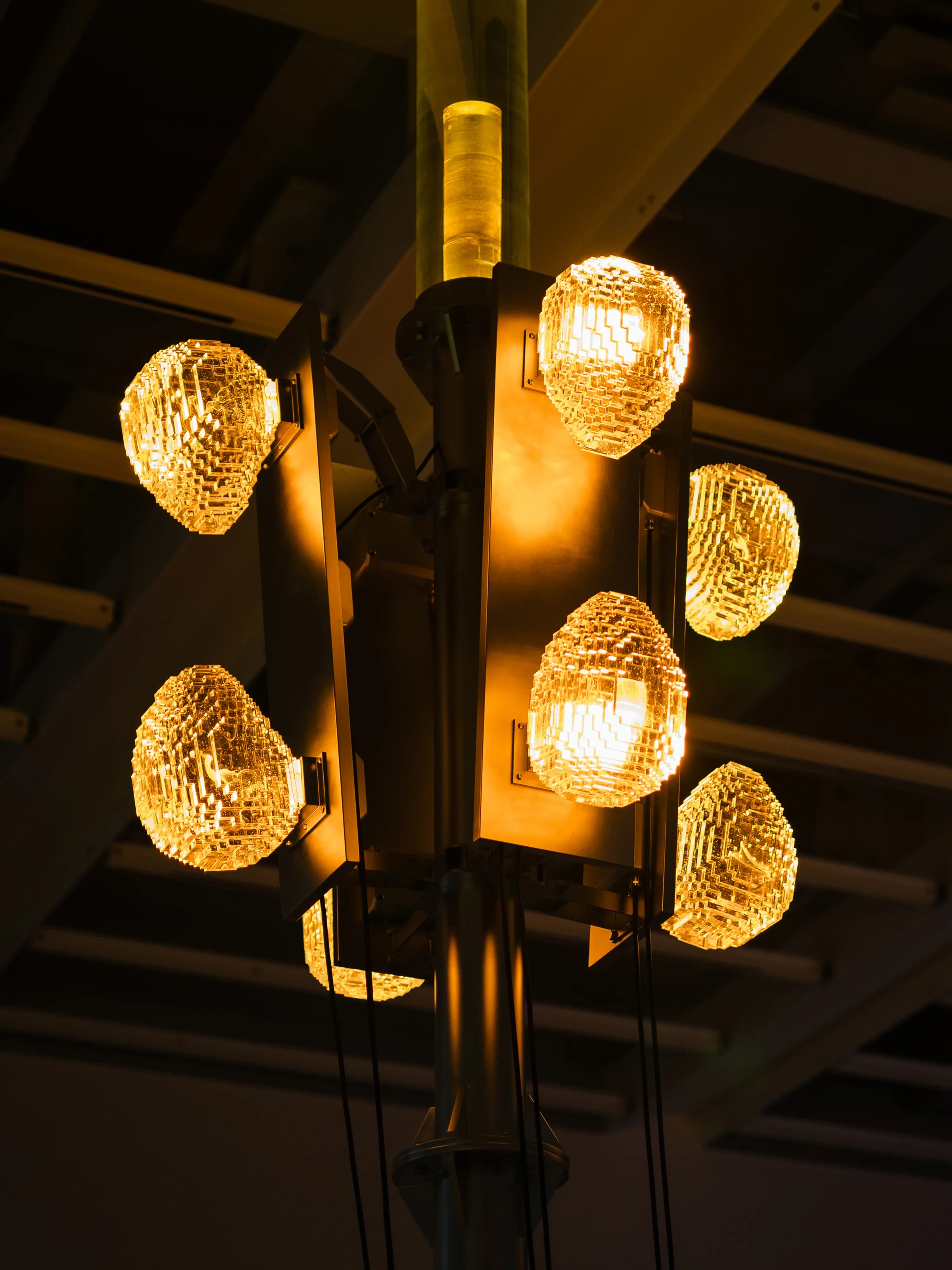
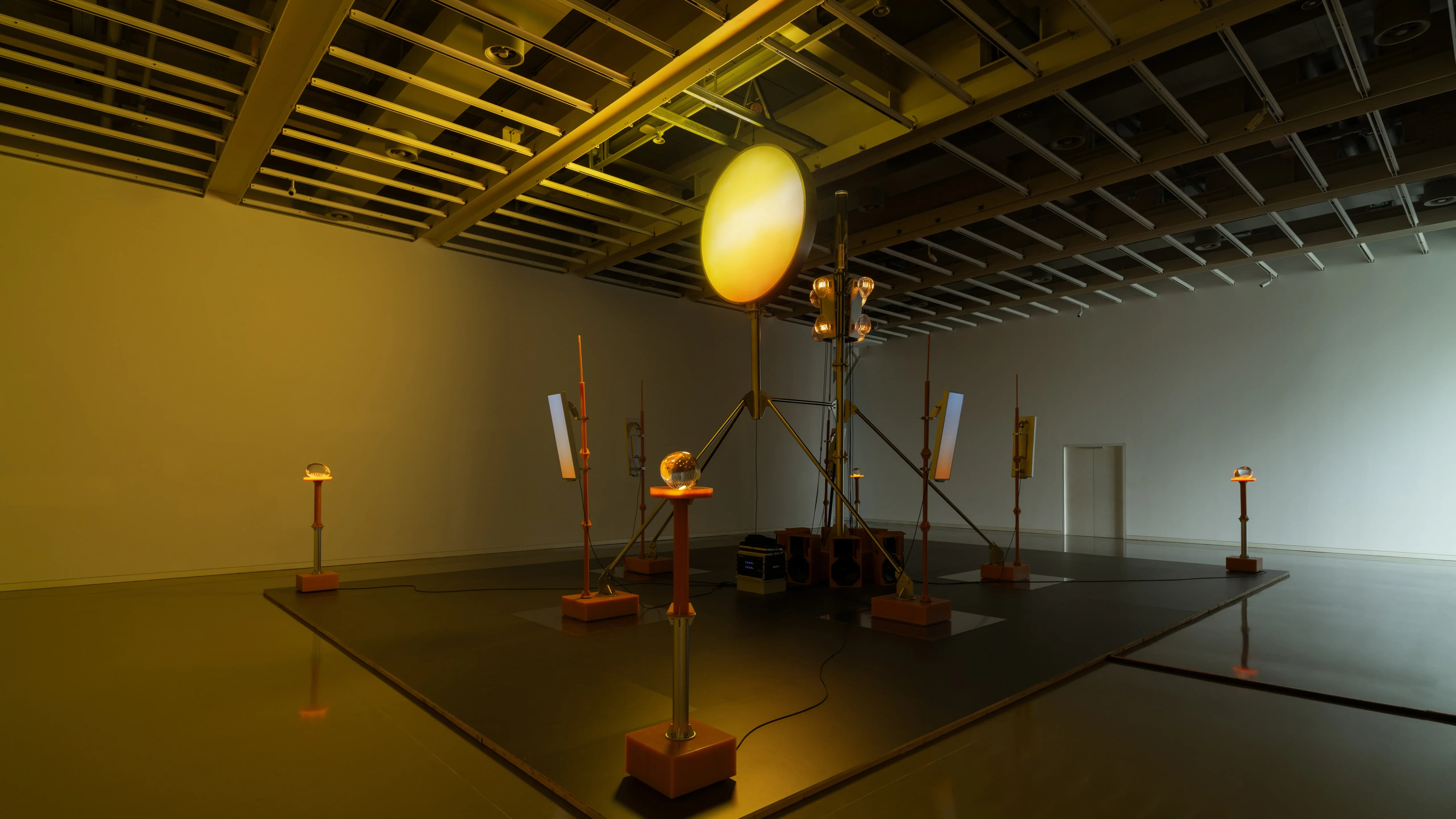
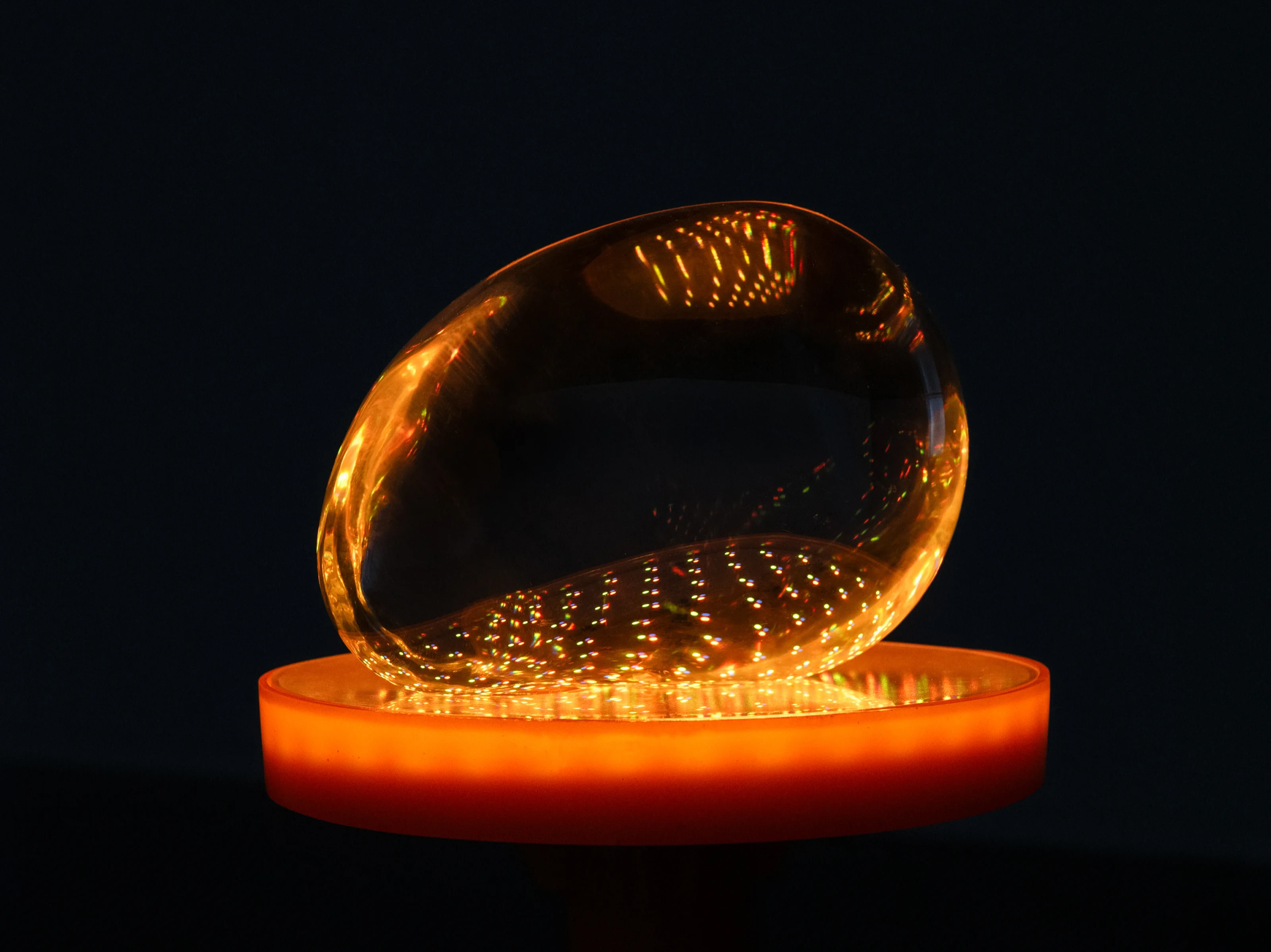
During the three-minute light cycle, the audience can choose their own way of experience: they can watch the complete color spectrum evolution of the "sun", or they can move in space to trigger the light and dark changes of the surrounding lights. The sound landscape is synchronized with the rhythm of light and shadow, creating an immersive and interactive perceptual environment. During the three-minute light cycle, if you choose to watch by the device, you can observe the precise movement of the disc light source from deep warm orange to cold white light, and the length and sharpness of the ground shadow will also produce physical displacement. As the crowd wanders freely through the space, the sensing system captures the physical trajectory in real time and triggers the bright and dark breathing of the surrounding lights. The light passes through the crystal refraction surface and sprinkles fine spots on the wall and the ground. These lights and shadows produce dynamic feedback of jumping or dissipation with the movement of people. The sound landscape is synchronized with the spectral rhythm, and the low-frequency resonance enhances the somatosensory immersion. This design enables the audience to perceive the digital reproduction of natural light in the indoor space only by physiological instinct without having to explain in words. In just a few minutes of fast-forward experience, people can regain their sensitivity to light intensity and warmth, and experience how time is woven figuratively by light and shadow.